Pinch Calluses: That Little Spot on Your Toe May Be Telling You Something
Welcome to Sacred Musings, a space where I share reflections from the heart on love, life, caregiving, and the lessons that shape us into who we are. My hope is that these words bring comfort, perspective, and inspiration to anyone walking their own path of healing and growth.
Understanding what pinch calluses are, why they develop, and how to keep your feet healthy and comfortable.
By Sacred Heart Nursing Services | Foot & Nail Care Education
Have you ever noticed a small, thickened patch of skin along the side of your big toe? Maybe it feels a little rough, looks slightly yellow, or becomes uncomfortable when you wear certain shoes.
You might have what's called a pinch callus.
Although pinch calluses are common and usually harmless, they can tell us something important about how our feet move, how our shoes fit, and where our skin experiences repeated pressure.
At Sacred Heart Nursing Services, we believe that healthy feet begin with understanding what your feet are trying to tell you.
What Exactly Is a Pinch Callus?
A pinch callus is a localized area of thickened skin that typically develops along the inner or underside edge of the big toe, often near the joint closest to the toenail.
Unlike calluses that develop on the heel or ball of the foot, pinch calluses form in areas where the skin experiences repeated pressure, friction, or a combination of both.
The skin responds by producing additional layers of protective tissue, primarily composed of keratin.
Think of it as your body's natural defense mechanism. When an area repeatedly experiences rubbing or pressure, the skin thickens to protect the tissue underneath.
Unfortunately, that protective response can eventually become uncomfortable.
Pinch calluses may appear:
Yellowish, white, or slightly darker than the surrounding skin
Thickened, dry, or rough
Along the side or underside of the big toe
Slightly raised or flattened
Tender when pressure is applied
Some people never experience discomfort, while others notice pain when walking, exercising, or wearing shoes.
Why Do Pinch Calluses Form?
Pinch calluses are generally caused by repeated mechanical stress. Several factors can contribute to their development.
1. The Way You Walk
Your walking pattern, also called your gait, plays a significant role in where pressure develops on your feet.
As you walk, your body weight shifts from your heel toward the front of your foot before you push off with your toes.
If your big toe experiences excessive pressure or rubbing during this movement, a pinch callus may develop.
Certain foot mechanics, including limited big-toe joint motion or excessive inward rolling of the foot, may contribute to this repeated stress.
2. Shoes That Don't Fit Properly
Shoes are one of the most common contributors to foot discomfort.
Narrow toe boxes, poorly fitted shoes, and footwear that compresses the toes can increase friction and pressure.
Even shoes that feel comfortable initially may cause problems after several hours of walking or standing.
Your toes need enough room to move naturally.
3. Bunions and Changes in Toe Alignment
A bunion, medically known as hallux valgus, occurs when the big toe gradually shifts toward the smaller toes.
This change in alignment can alter the distribution of pressure across the foot.
As a result, certain areas of the big toe may experience increased friction, contributing to callus formation.
Other structural changes, including stiffness or arthritis of the big-toe joint, can also affect how pressure is distributed.
4. Repetitive Activities
Walking, running, dancing, and prolonged standing can increase repetitive stress on the feet.
These activities are not inherently harmful. In fact, staying active offers tremendous health benefits.
However, footwear, foot mechanics, and activity intensity all influence whether certain areas of skin experience excessive pressure.
Are Pinch Calluses Serious?
For most healthy individuals, pinch calluses are not dangerous.
They are generally a response to repeated pressure rather than a disease.
However, there are circumstances in which a callus deserves closer attention.
A thick callus may become painful, develop cracks, or conceal irritation underneath the skin.
In some cases, especially when pressure continues over time, the underlying tissue can become damaged.
Special Considerations for People With Diabetes
Individuals living with diabetes should pay particular attention to calluses.
Diabetic peripheral neuropathy can reduce sensation in the feet, making it difficult to recognize excessive pressure, irritation, or injury.
A person may continue walking on an area of damaged skin without realizing that a problem is developing.
Additionally, impaired circulation can interfere with wound healing.
For individuals with diabetes, a callus may sometimes conceal bleeding or tissue damage beneath the surface, and continued pressure can contribute to ulcer formation.
A callus in someone with diabetes should never be dismissed simply because it doesn't hurt.
People with diabetes, poor circulation, neuropathy, or a history of foot ulcers should have calluses evaluated by an appropriate healthcare professional rather than attempting to remove them at home.
How Should You Care for a Pinch Callus?
The goal of callus care is not simply to remove thickened skin. It is to reduce the repeated pressure or friction that caused the callus to develop.
Here are several ways to care for your feet safely.
Choose Shoes With Adequate Toe Room
Look for footwear with a wide, anatomically shaped toe box that allows your toes to rest comfortably without being compressed.
Your shoes should fit the length and width of your feet.
Remember, shoe size and foot shape can change over time.
Moisturize Regularly
Dry skin can make calluses feel harder and more uncomfortable.
Applying a fragrance-free moisturizing cream can help maintain skin flexibility.
Products containing urea may be helpful for thickened skin because urea attracts moisture and, at certain concentrations, helps soften excess keratin.
However, stronger callus-softening preparations are not appropriate for everyone.
People with diabetes, neuropathy, poor circulation, or fragile skin should consult their healthcare professional before using keratolytic products.
Avoid applying moisturizer between the toes, where excess moisture may contribute to skin breakdown.
Avoid Cutting Calluses Yourself
It may be tempting to use scissors, nail clippers, razors, or other sharp instruments to remove thickened skin.
Please don't.
Cutting a callus can accidentally damage healthy tissue and create an opening for infection.
Over-the-counter medicated corn and callus removers, particularly those containing salicylic acid, can also injure surrounding skin and are especially risky for people with diabetes or circulation problems.
Consider Gentle Skin Maintenance
For individuals without diabetes, neuropathy, poor circulation, or other high-risk foot conditions, gentle use of a pumice stone on intact skin may help manage mild thickening.
Never scrub aggressively or attempt to remove the entire callus at once.
If the area is painful, cracked, discolored, or otherwise abnormal, avoid filing it and seek professional evaluation.
Address the Underlying Pressure
A recurring pinch callus often indicates that the same area continues to experience excessive pressure.
Depending on the cause, interventions may include footwear modifications, appropriately fitted protective padding, orthotics, or an assessment by a podiatrist.
Removing thickened skin without addressing the underlying cause may provide temporary relief, but the callus is likely to return.
When Should You Seek Professional Attention?
Schedule a foot evaluation if you notice:
A callus that becomes increasingly painful
Cracking, bleeding, or skin breakdown
Redness, warmth, swelling, or drainage
Dark discoloration or suspected bleeding beneath a callus
A callus that repeatedly returns despite footwear changes
Changes in the shape or position of your toes
People with diabetes, neuropathy, or circulation problems should seek professional assessment promptly when a new or changing callus appears.
If you notice an open wound, spreading redness, or signs of infection, seek medical care without delay.
How Sacred Heart Nursing Services Can Help
At Sacred Heart Nursing Services, we recognize that foot care is an important part of maintaining mobility, comfort, independence, and quality of life.
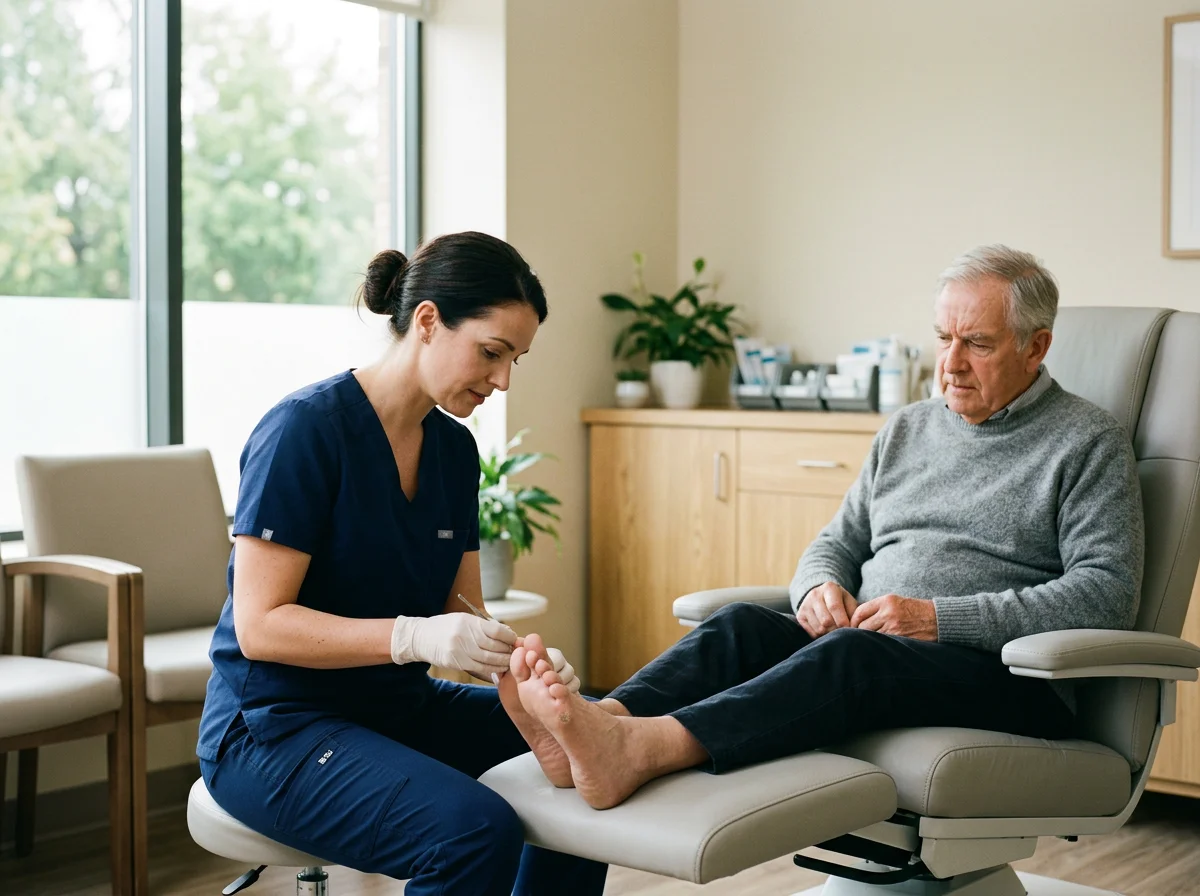
Our RN-led foot and nail care services focus on preventive care, early identification of potential problems, and patient education.
During your appointment, we can assess your feet for visible skin changes, pressure areas, nail concerns, and other findings that may require attention.
Depending on your individual needs and clinical findings, services may include appropriate non-invasive foot care, moisturizing, footwear education, and recommendations for follow-up with a podiatrist or your primary care provider.
We also help clients understand the importance of daily foot inspections, especially when chronic health conditions increase the risk of complications.
Our goal is to help you become an active participant in maintaining your foot health.
A Final Thought: Your Feet Deserve Attention
A pinch callus may seem like a small issue, but it can provide valuable information about how your feet function.
Sometimes, a simple footwear adjustment makes a meaningful difference. Other times, a recurring callus may signal the need for a closer look at your walking mechanics or foot structure.
The important thing is not to ignore changes simply because they appear minor.
Your feet support you through thousands of steps every day.
Give them the attention and care they deserve.
Schedule Your Foot Health Assessment
Whether you're experiencing recurring calluses, thickened toenails, dry skin, or simply want to be proactive about your foot health, Sacred Heart Nursing Services is here to help.
We offer appointment-based RN foot and nail care services at our El Cerrito location and through mobile visits in select Bay Area communities.
Sacred Heart Nursing Services
Compassionate Care. Healthy Feet. Greater Independence.
Visit www.sacredheartnursingservices.net to learn more about our services and schedule an appointment.
Educational Disclaimer
This article is intended for general educational purposes and does not replace individualized medical advice, diagnosis, or treatment. Calluses can resemble other skin conditions, including corns, warts, and certain skin lesions. Consult a qualified healthcare professional for persistent, painful, unusual, or changing foot conditions.