Learning to Rest: How Sleep Supports Weight Loss and Mental Health
Welcome to Sacred Musings, a space where I share reflections from the heart on love, life, caregiving, and the lessons that shape us into who we are. My hope is that these words bring comfort, perspective, and inspiration to anyone walking their own path of healing and growth.
Before I became a mother, I slept like a log.
Then I had my son, and something changed. Even when I was sleeping, I felt as though I was hovering just above being awake. I was always listening, waiting for the next “wah,” ready to get up and tend to him.
My son is 23 now. But learning to fully relax at night has taken much longer than those baby years.
Over time, I learned the hard way that insufficient sleep affects more than how tired I feel the next morning. It deserves attention alongside the food I eat, the movement I get, and the ways I care for my mental health.
For about five years now, I have practiced a bedtime ritual that helps me settle down. It is simple, comforting, and one of the most useful habits I have created for myself.
What My Weight-Loss Journey Taught Me About Sleep
I have lost more than 100 pounds, going from approximately 285 pounds to about 177. Along that journey, I noticed a pattern: when I consistently went to bed between 9 and 10 p.m., my weight loss seemed steadier. When I stayed awake until 2 or 3 in the morning, I often felt stuck at a plateau.
That is my personal observation. It does not mean everyone needs my bedtime, or that going to bed earlier automatically causes weight loss. Weight changes have many contributing factors. But it made me pay closer attention to sleep as part of my overall routine.
Research supports that connection. In a short randomized trial involving 80 adults with overweight who routinely slept less than 6½ hours, participants who extended their sleep ate approximately 270 fewer calories per day, on average, than the comparison group. The study lasted two weeks, so it does not establish a guaranteed long-term weight-loss result. It does show that improving sleep can support the eating habits involved in weight management. (pubmed.ncbi.nlm.nih.gov)
For most adults, the recommended amount is seven to nine hours each night. My own goal is to protect enough time for sleep and keep a schedule I can maintain. (nhlbi.nih.gov)
Rest Matters for the Mind, Too
Sleep helps us learn, concentrate, make decisions, and regulate our emotions. When we are sleep deprived, handling stress and coping with change can become harder. Chronic sleep problems are also associated with anxiety and depression. (nhlbi.nih.gov, nichd.nih.gov)
As a nurse, I understand how much we ask of our bodies and minds. As a mother, I understand how easily we become accustomed to being available.
My bedtime ritual is a way of practicing something different: giving myself time to settle, without another task waiting in my hands.
My Ritual: Less Stimulation, More Comfort
The foundation of my routine is reducing light and sound and making myself physically comfortable. A quiet, cool, dark bedroom and a consistent sleep schedule are established recommendations for healthier sleep. (nhlbi.nih.gov)
Earplugs. I use earplugs to soften the sounds around me. They help me stop listening to every little noise. If you use them, consider whether you still need to hear an alarm or someone who depends on you.
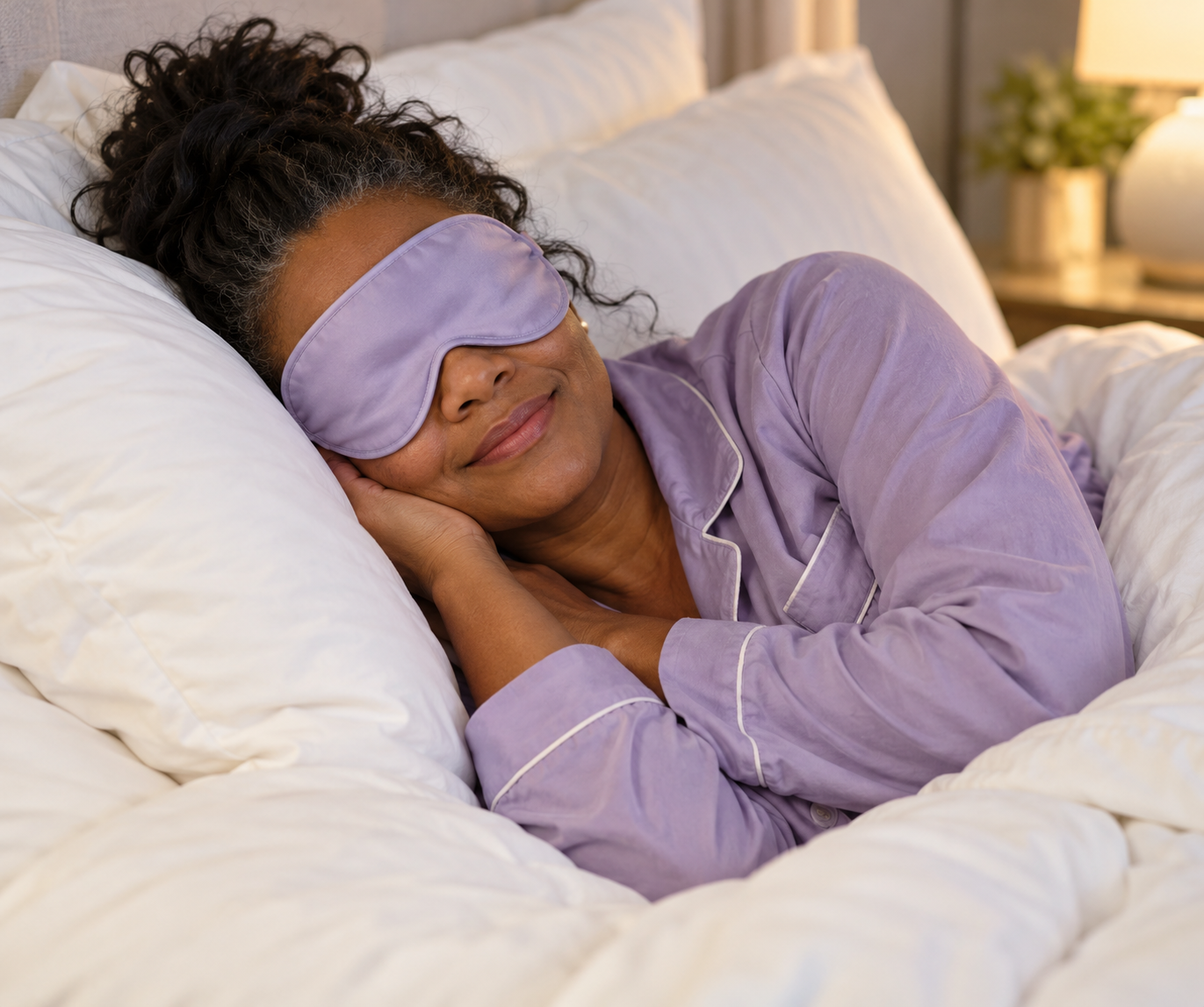
A sleep mask. Blocking out light helps create the darkness I want, even when my room is not completely dark.
Lavender pillow spray. I enjoy the scent as part of the transition into bedtime. For me, it is a comforting cue that the day is winding down.
Soft pajamas. Cotton, linen, silk, or satin, whatever feels comfortable against my skin. Most nights, I prefer a full pajama shirt and pants. Sometimes, a soft bralette and underwear feel better. The point is to feel comfortable, without being too warm.
I also tried a weighted blanket. I liked it, but I did not continue using it. That experience reminded me that a ritual can be useful without including every available sleep accessory.
The best routine is one you enjoy enough to repeat.
Create Your Own Invitation to Rest
You can begin with a few small changes:
Dim the lights and reduce bright screens during your wind-down time.
Keep your bedroom cool, dark, and quiet.
Choose a bedtime and wake time that allow sufficient sleep.
Wear something comfortable.
Avoid late caffeine; if tea is part of your ritual, check that it is caffeine-free.
Give yourself a quiet transition between the activity of the day and bedtime.
These habits align with guidance from the National Heart, Lung, and Blood Institute. (nhlbi.nih.gov)
You do not need an expensive collection of products to begin. Sometimes, the most valuable change is making room for rest in your schedule.
Items for a Comforting Bedtime Routine
Here are the links I have gathered for readers who want to explore a bedtime ritual of their own:
Think of these as optional comforts. They are not established treatments for insomnia. Research on magnesium for sleep is limited and does not establish that magnesium lotion improves sleep. Check ingredients and directions, especially if you have sensitive skin, fragrance sensitivities, or take medications that could interact with herbal tea ingredients. (nccih.nih.gov)
When a Ritual Needs More Support
A comforting routine can help create better conditions for sleep, but persistent insomnia deserves care. If you regularly struggle to fall asleep, stay asleep, or feel rested, speak with a healthcare professional. Cognitive behavioral therapy for insomnia, or CBT-I, is an evidence-based treatment worth asking about. (nccih.nih.gov)
I spent years feeling as though some part of me needed to remain awake and available.
Now, each evening, I put on my soft pajamas, reach for my earplugs and sleep mask, and give myself permission to settle.
Taking care of myself includes allowing myself to rest.
Health and Personal-Experience Disclosure
This article shares my personal experience and general health education. It does not replace individualized medical advice, diagnosis, or treatment. My weight-loss journey and preferred bedtime are personal experiences, and results vary. The products linked here are optional comforts; they are not presented as proven treatments for insomnia, mental health conditions, or weight loss. If sleep problems persist or affect your daily functioning, consult a qualified healthcare professional.
Affiliate Disclosure
This post contains affiliate links. If you purchase through these links, I may earn a commission at no additional cost to you. As an Amazon Associate I earn from qualifying purchases. Purchasing through these links is optional.
References and Further Reading
Tasali, E., Wroblewski, K., Kahn, E., Kilkus, J., & Schoeller, D. A. (2022). Effect of sleep extension on objectively assessed energy intake among adults with overweight in real-life settings: A randomized clinical trial. JAMA Internal Medicine, 182(4), 365–374. https://doi.org/10.1001/jamainternmed.2021.8098
National Heart, Lung, and Blood Institute. Sleep deprivation and deficiency: How sleep affects your health. National Institutes of Health. Read more.
National Heart, Lung, and Blood Institute. How sleep works: How much sleep is enough? National Institutes of Health. Read more.
National Heart, Lung, and Blood Institute. Sleep deprivation and deficiency: Healthy sleep habits. National Institutes of Health. Read more.
National Institute of Child Health and Human Development. How does inadequate sleep affect health? National Institutes of Health. Read more.
National Center for Complementary and Integrative Health. Sleep disorders and complementary health approaches: Usefulness and safety. National Institutes of Health. Read more.