
Welcome to Sacred Musings, a space where I share reflections from the heart on love, life, caregiving, and the lessons that shape us into who we are. My hope is that these words bring comfort, perspective, and inspiration to anyone walking their own path of healing and growth.
By Kimberly, RN | Founder, Sacred Heart Nursing Services
After nearly two years of walking, jogging, running, and losing more than 100 pounds, I discovered something that genuinely surprised me: I had been wearing the wrong size athletic shoes. Not just the wrong size, but the wrong width, too!
And I had no idea how much that might have been affecting my feet.
In my previous blog, I shared that I was preparing for my first professional athletic shoe fitting at Road Runner Sports in Berkeley, California. I wanted to understand my gait, learn more about my foot structure, and find shoes that would better support my active lifestyle.
Well, I went to my appointment, and I have quite a story to tell!
First, Let Me Tell You About the Pain
For nearly two years, I've been committed to improving my health through weight loss, walking, jogging, and running. My feet have carried me through thousands upon thousands of steps.
But recently, I began experiencing significant pain in my feet, particularly around my great toe joint.
The discomfort became so severe that one evening, despite taking 1,000 milligrams of Tylenol, I awakened twice during the night crying from the pain.
At its worst, the pain was a 10 out of 10.
I knew something wasn't right.
I initially wondered whether arthritis, repetitive impact from running, or my choice of athletic shoes might be contributing to the problem.
I also received a therapeutic foot massage that provided remarkable temporary relief, reducing my pain from approximately 10 out of 10 to 4 out of 10.
But I still needed to understand what was happening with my feet.
As a registered nurse preparing to expand my own foot and nail care practice, I recognized that I needed to give my feet the same attention and consideration I encourage others to give theirs.
My Experience at Road Runner Sports
When I arrived at Road Runner Sports in Berkeley, I was greeted by Tasha, who would assist me with my fitting.
She was wonderful!
Tasha was patient, attentive, and genuinely interested in understanding what I needed. She seemed almost intuitive about my preferences. Throughout our appointment, she often anticipated which shoes I would like before I even confirmed my choices.
We were completely in sync.
But the most important part of the appointment wasn't the shoes themselves.
It was discovering that the size and width I had been wearing were not appropriate for my feet.
For years, I had purchased athletic shoes based on the size I believed I wore. I had never seriously considered that my feet might have changed or that my shoes could be contributing to my discomfort.
I walked out with a new pair of shoes that felt incredibly comfortable, with more appropriate room and support for my feet.
I did experience one brief shooting pain afterward, so I know there may still be an underlying issue requiring medical attention. Nevertheless, the improvement in comfort was noticeable.
I left feeling happy, informed, and much more confident about my footwear choices.
And I couldn't help thinking: How many other people are walking around in shoes that don't actually fit?
Your Feet Can Change, Even After You've Stopped Growing
One of the most important lessons from this experience is that our shoe size isn't necessarily permanent.
Many adults assume that once they reach adulthood, their feet remain the same size forever.
That isn't always the case.
Although our foot bones generally stop growing in length once we reach skeletal maturity, the structure and dimensions of our feet can continue to change throughout adulthood.
Several factors can contribute to these changes.
Pregnancy and Childbirth
During pregnancy, hormonal changes increase ligament flexibility, while changes in body weight and posture place additional demands on the feet.
Some women experience changes in arch height, foot length, or width that persist after pregnancy.
This is one reason I especially encourage women who have had children to reconsider their shoe size rather than assuming their pre-pregnancy measurements are still accurate.
Aging
As we age, ligaments, tendons, soft tissues, and the structures supporting our arches can change.
Some people experience a gradual lowering of the arches or widening of the forefoot.
Our feet don't necessarily continue growing, but their shape and dimensions may change enough to require a different shoe size or width.
Significant Weight Changes
Weight changes can influence the way our feet bear loads and interact with footwear.
Having lost more than 100 pounds, I was particularly interested in understanding whether my own foot measurements or support needs had changed.
Weight loss doesn't automatically mean a person will need smaller shoes. Foot structure, width, arch shape, and individual anatomy all play a role.
Years of Physical Activity
Walking and running place repeated forces through the feet.
Although exercise doesn't necessarily make our feet larger, it can reveal problems with footwear fit, pressure distribution, or existing joint conditions.
For active individuals, even a small mismatch between the foot and the shoe can become increasingly uncomfortable over time.
What Improperly Fitted Shoes Can Do to Your Feet
Shoes that are too short, narrow, loose, or otherwise poorly fitted can create problems beyond simple discomfort.
They may contribute to:
Excessive pressure on the toes and forefoot
Corns, calluses, and blisters
Nail irritation and ingrown toenails
Increased discomfort around bunions or arthritic joints
Friction and skin breakdown
Changes in walking comfort and movement patterns
For people living with diabetes, neuropathy, or circulation problems, poorly fitted shoes can be especially concerning because pressure injuries may go unnoticed or heal slowly.
In my case, the pain around my great toe joint made me particularly interested in whether my shoes were restricting normal movement or placing excessive pressure on that area.
I now know my previous shoes weren't fitting correctly.
What I don't know yet is whether they caused or aggravated my joint pain.
That distinction matters.
What About the Great Toe Joint?
The great toe plays an important role in walking and running, especially during the push-off phase of movement.
The first metatarsophalangeal joint, commonly called the first MTP joint, connects the great toe to the foot.
When this joint becomes painful or stiff, even ordinary walking can become uncomfortable.
Several conditions can affect this area, including osteoarthritis, hallux rigidus, inflammation, gout, and other structural or soft-tissue problems.
Shoes that compress the toes or place pressure on a sensitive joint may aggravate symptoms.
For some people, a roomy toe box, appropriate forefoot stiffness, or rocker-style sole may help reduce discomfort.
However, no shoe can replace a proper medical evaluation.
Because my pain has been severe enough to interrupt my sleep, I am following up with my physician for further evaluation, including consideration of X-rays, laboratory testing, and a podiatry referral as clinically appropriate.
I want to know what's happening before I return to higher-impact running.
Pain is information, and sometimes our bodies are asking us to pay closer attention.
Five Lessons I Want Everyone to Take Away From My Experience
1. Don't Assume You Know Your Shoe Size
Just because you've worn the same size for 10 or 20 years doesn't mean it's still correct.
Have both feet measured for length and width, preferably while standing.
Remember that one foot may be slightly larger than the other. Your shoes should accommodate the larger foot.
2. Give Your Toes Room to Move
A properly fitted athletic shoe should provide adequate space in the toe box without allowing the heel to slip excessively.
Your toes shouldn't feel compressed, crowded, or forced into an unnatural position.
A comfortable shoe should feel good when you're walking in it, not just when you're sitting down trying it on.
3. Choose Shoes for Your Feet, Not Just the Brand
I originally exercised in Adidas shoes, which served me well for approximately a year.
Later, I switched to another brand, believing I was making an upgrade. The shoes initially felt wonderful, but the comfort didn't last as long as I expected.
I learned that a higher price, popular brand, or impressive cushioning doesn't automatically mean a shoe is right for my feet.
Fit and comfort matter more than the label.
4. Pay Attention to Wear and Tear
Athletic shoes lose cushioning and structural integrity with use.
Many running shoes are replaced somewhere around 300 to 500 miles, although actual lifespan varies.
If you're walking or running several miles regularly, those miles accumulate quickly.
Monitor your shoes for uneven wear, changes in stability, and loss of comfort.
5. Don't Ignore Persistent Pain
This may be the most important lesson of all.
If your feet hurt repeatedly during or after exercise, don't automatically assume it's normal soreness.
And if the pain becomes severe, interferes with sleep, or changes how you walk, seek medical evaluation.
A professional shoe fitting can help identify footwear needs, but it cannot diagnose arthritis, fractures, inflammatory conditions, or other medical problems.
Why I Especially Encourage Women to Get Their Feet Measured
Women often experience significant physical changes throughout their lives.
Pregnancy, childbirth, hormonal changes, aging, changes in body weight, and years of standing or working can all influence foot comfort and footwear needs.
Yet many women continue purchasing the same shoe size they've worn for decades.
I think it's time we reconsider that habit.
You don't have to be a runner to benefit from having your feet measured.
Whether you're walking for exercise, working long shifts, traveling, or simply going about your daily routine, properly fitted shoes can make a meaningful difference in comfort.
And please, don't let the number on the shoe box discourage you.
The goal isn't to wear a particular size. The goal is to wear shoes that actually fit.
Our feet deserve comfort, not unnecessary pressure or discomfort caused by an attachment to a number.
What This Experience Means for Sacred Heart Nursing Services
As I establish Sacred Heart Nursing Services and expand my focus on preventive foot and nail care, experiences like this remind me why foot health education is so important.
Foot care is about much more than trimming toenails or managing calluses.
It's about understanding the factors that influence comfort, mobility, balance, skin integrity, and independence.
Footwear is an important part of that conversation.
During a nursing foot health assessment, attention to skin condition, nail health, circulation, sensation, pressure areas, and footwear concerns can help identify problems that may require education, monitoring, or referral.
We can also encourage clients to recognize when shoes no longer fit appropriately and when professional footwear assessment or podiatric care may be beneficial.
For older adults and individuals managing chronic health conditions, these preventive conversations can be especially valuable.
Healthy feet support mobility, and mobility supports independence.
That philosophy is at the heart of my nursing practice.
Final Thoughts: Sometimes the Smallest Adjustments Make a Big Difference
I went to Road Runner Sports expecting to purchase a better pair of athletic shoes.
Instead, I learned something important about my feet.
After nearly two years of improving my health, losing weight, and becoming more physically active, I discovered that I had overlooked something as basic as wearing the correct shoe size and width.
I left with comfortable shoes, useful information, and a renewed appreciation for the importance of foot health.
I'm grateful to Tasha for her patience, professionalism, and thoughtful assistance throughout the fitting.
I'm also grateful that I listened to my body and decided to investigate rather than simply pushing through the pain.
My medical evaluation is still an important next step, and I don't yet know exactly what's causing my great toe joint pain.
But I do know this:
Our feet carry us through every stage of life. They deserve to be measured, supported, examined, and cared for as our bodies change.
If you haven't had your feet measured in years, perhaps it's time.
You might be surprised by what you discover.
And your feet just might thank you.
About Sacred Heart Nursing Services
Sacred Heart Nursing Services provides RN-led preventive foot and nail care with an emphasis on health education, routine foot assessments, nail and skin care, and recognition of conditions requiring medical referral.
Our mission is to help individuals maintain healthy feet, promote comfort, and support mobility and independence through compassionate, professional nursing care.
Learn more: www.sacredheartnursingservices.net
Medical disclaimer: This article reflects my personal experience and provides general foot health education. It is not a substitute for medical advice, diagnosis, or treatment. Persistent, severe, or unexplained foot pain should be evaluated by a qualified healthcare professional.
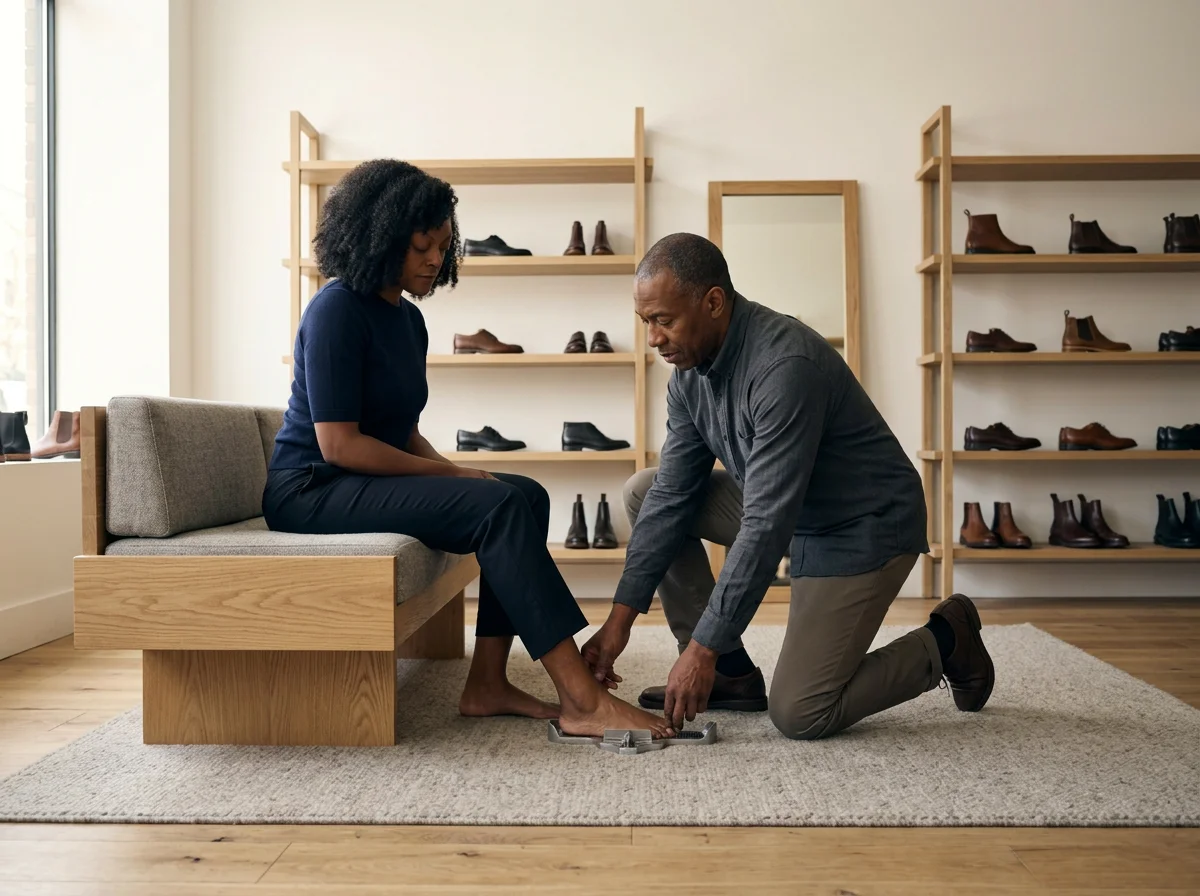
The right size makes all the difference.